Does Insurance Cover Dental Treatment for Adults?

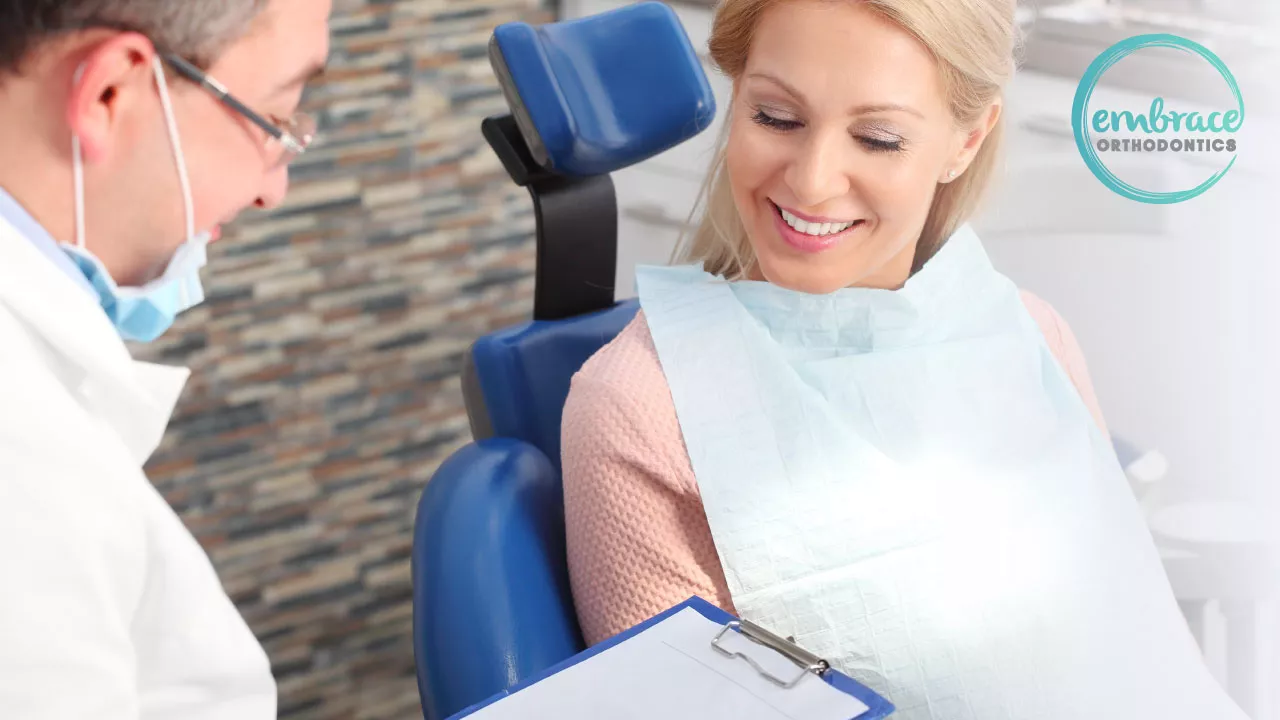
Most people worry when they hear they need orthodontic treatment because dental procedures tend to be very expensive. So it’s natural that you want to know all about insurance and its coverage.

Before thinking of what it is going to cost you, you have to know the benefits. Does everybody need orthodontic appliances? The answer is no, of course not.

But people with cooked teeth, overbites, underbites, or crowded teeth should have dental care. Orthodontic treatments are not only about the appearance of your denture but its healthy functioning.

You should know which treatment plans are available and what are the best options regarding results, procedure length, and prices. That’s we want to present a quick guide for you in this matter.

General Recommendations About Dental Care

Sometimes we let perfectionism get to our heads, affecting not only our work or our personal relationships but our well-being. We often feel self-conscious about our smiles. We all want a perfect smile.

Forget about comparing your teeth to some influencer’s denture just because they say you should try X treatment to straighten your teeth.

Consult your doubts with a reliable doctor and let them decide if you really need dental appliances or not. They will know for sure what is best for you.

What Are the Best Orthodontic Treatments?

Orthodontics is a science that has been around since the 1800’s mid-century. Braces, as we know them today, were invented in the 1970s. Metal brackets with metal wires and archwires are the most popular treatment.

Braces

Traditional braces are a big favorite among expert orthodontists because they can solve almost all of the problems related to human dentures.

They are often the best alternative if you have severe to mild malocclusion or misalignment issues. Getting braces usually represents a long and effective plan.

The treatment consists in attaching metal or ceramic brackets to your teeth with special dental cement. Then, a metal wire connects every bracket with each other and to the archwires in your molars.

Pressure is applied to move the teeth into the desired position. Sometimes extractions are needed to gain space.

Different materials serve different purposes. For example, ceramic braces are much more discreet and less resistant.

Lingual Braces

This is a variation of the typical front braces. Lingual braces are attached to the back of your teeth. The functioning is pretty much the same, but with this modality, nobody, except for your doctor, gets to see your braces.

Patients that have had this treatment say it is a little uncomfortable to feel the brackets directly against your tongue.

Invisible Aligners

Clear aligners are the newest orthodontic treatment. Experts ensure their effectiveness and their benefits.

Orthodontic retainers are great because they are transparent and delicate. You don’t get anything attached to your teeth, and no metal wires are involved.

We have to say that clear invisible aligners cannot solve as many problems as metal braces, but they are still a fantastic option, and you should check it out.

How Much Do Braces Cost for Adults?

Now we can go back to the theme of this article. Prices.

Once you’ve had an appointment with your doctor and your mouth undergoes a proper examination, we recommend comparing each treatment plan. It would be good to know the budget you were counting on previously and if you can get insurance.1

Metal Braces

Traditional metal braces have a standard price of $5.000. It can be lower than that or a little higher. The final cost will depend on the specifics of your treatment plan, like how severe the issues with your teeth are or the extra work needed (such as extractions).

Since your mouth and teeth are important for your health, dental care is often covered by insurance programs.

Ceramic Braces

We should begin to tell you that ceramic braces are a little more expensive than metal braces. This fact responds to various reasons:

  • The materials they are made with have a higher cost.
  • Ceramic braces are less resistant over time than the metal alternative, meaning that you will probably need to change them during the treatment.

Prices for this type of orthodontic appliance go from $5.000 to $7.000. Since this is an esthetic alternative, it is harder to find insurance policies that cover it.

Lingual Braces

Of all three, lingual braces are the most expensive option when it comes to orthodontic alignment treatments. The explanation is that this procedure can be more complex than traditional braces since the access to the brackets is not as direct.

The cost can elevate to $13.000, starting at around $7.000. The principal benefit is that other people hardly notice this type of appliance.

Which Insurance Covers Braces?

HealthCare.gov Marketplace

This service can be of great help to people under eighteen years old who need to fix moderate to severe misalignment problems with their teeth.

They offer different modalities that vary in the prices you pay per month versus the prices you pay when getting the treatment.

Humana Dental

Humana Dental has a dental insurance program with no waiting time. The package has variations to adjust to the patient’s needs.

Their prices start at as low as $18.00 per month. But they also offer wider coverage for $44.00 a month. Of course, the rates will depend on your profile as a patient.

Cigna Dental

Cigna Dental has insurance plans that can cover up to $2.500 of your treatment for $32.00 a month.

They also have plans starting at $20.00 that include coverage for certain orthodontic specialties.

Consult Your Insurance Options With Us

Click here to make an appointment with our team at your convenience and get to know the best insurance plans for your case.


The Spinning Wheel of Evolution in Orthodontics.

From ancient animal-origin wires passing through braces reaching to clear aligners, today, it is almost unimaginable to envisage a world without clear-cut invisible devices.

Comfortable, almost unperceivable, and accessible orthodontic appliances like Invisalign and most removable aligners are –in vogue-. However, it hasn’t always been that way.

The history behind orthodontia evolved from ancient times, but the principles that embrace teeth alignment remained constant, at least for the last couple of centuries.

Verily, physics stands at the paramount of orthodontic treatment, and advancements in understanding the biological functions and motion of the human body became what we know today as biomechanics, applied in teeth alignment.

Indeed, contemporary orthodontic treatment serves itself from digital imagery for dental impressions, materials engineering for alignment trays and stainless steel wires, and other disciplines and techniques to ease the journey to get a healthy and beautiful smile faster and lessen the trauma for patients.

This article takes us on a tour through the history and scientific principles of orthodontics, from its origins to modern orthodontics.

History Of Braces

Have you ever wondered, what was the earliest form of dental braces? Here we tell you in a short story-like timelapse about how orthodontic treatments evolved.

To contextualize, when we think of having an attractive smile, ancient civilizations also had an idea about what was for them an ideal position for teeth. Gratefully, today having a beautiful smile goes hand-by-hand with its functionality. So let’s begin this journey with the first civilization recorded to use incipient forms of braces.

The Egyptian Civilization

Egyptians remained a prominent civilization for around 30 centuries, from over 3000 years before Christian registries until the Roman conquest by Alexander the Great.

Egyptians used the catgut, which is a cord made of animal entrails, to wrap teeth producing force in an attempt to correct teeth spacing.

The Etruscans

The Etruscans were a population that, at some point in history, lived in what we now know as Italy and during the Roman Empire. The Etruscan people developed primitive versions of something similar to an orthodontic bridge and a guard made of gold.

These ancient mouth appliances were destined for burial rituals to preserve the dental structure of deceased Etruscan women before entering the afterlife. The Etruscans wanted teeth after death to look good in their new continuation of life.

The Roman Empire

A roman intellectual that today could have been called a “researcher,” Aulus Cornelius Celsus, compiled evidence of how by applying gentle and intermittent pressure on a tooth, he could move, reaching an aligned position.

Also, during this age, an early attempt at a braces system included a gold band bound to a nascent form of a bracket attached to teeth, intending to close teeth gaps.

The French Revolution

As you might have noticed, we use civilizations, eras, and events to characterize the times that marked certain moments that we link with orthodontic device developments. In fact, during the 18th century, many scientific discoveries sprung up.

At this point in time, we can refer to early orthodontists who began to understand the complexity of orthodontic displacements in more detail.

The French dentist Pierre Fauchard used a modern for the era type of braces named bandeau made of iron that worked like a palatal expander on the upper arch.

Louis Bourdet improved Fauchard’s insight by adding up the removal of certain teeth to create space to eliminate overcrowding.

An American Discipline

During the 19th century, orthodontics became an American discipline to the point where in 1840, the first college dedicated to dental surgery issues opened in Baltimore.

J.S. Gunnell invented a form of headgear in 1822. This apparatus was externally affixed to the cranial structure to move teeth into proper alignment. 

Chapin A. Harris not only initiated the first odontology school but also published a book named The Dental Art – Practical Treatise of Dental Surgery that included the use of bands to perform a tooth rotation.

Also, as it occurs in several areas, some inventions are adapted to other applications. For example, Charles Goodyear invented the rubber that E.G. Tucker later incorporated into orthodontics, using rubber bands to treat misalignments.

Continuing with applications from developments in other areas, Wilhelm Roentgen discovered the X-rays in 1895 by accident, and dentist Eugene S. Talbot first used them to prevent overcrowded teeth by obtaining a diagnosis of impacted third molars.

Modern Orthodontics

We call modern orthodontics the era of steel modern braces as the dominant type of orthodontic apparatus and dental appliances. Thought in the 20th century, the orthodontic discipline grew to formulate systematic orthodontic contributions and concepts to classify teeth misalignments, or in technical terms, “malocclusions,” as described by American dentist Edward Angle.

During the 1970 decade, a revolutionary improvement arose: the possibility of cementing metal brackets to teeth instead of wrapping them in a silver metal band. However, despite the many technological advances, we must be clear that this age has not ended.

Early Twenty-First Century

Modern orthodontics evolved one step further with the insertion of invisible aligners in the market. The funny fact is that even though we visited a historical sequence of experts in the dental area, the idea of clear aligners sprouted from two individuals with zero orthodontic training.

The idea came from using plastic retainers. After a patient stops using a retainer, teeth slowly shift to their former position, and the opposite happens after several days of using the retainers.

Using a 3D model of a retainer, the entrepreneurs Zia Chishti and Kelsey Wirth reversed the progression of alignment of teeth in individual patients to stage zero and assigned each stage a number that served to specify each set of alignment trays as a model.

This is the story behind Invisalign, which started in 2000. However, in 2017, the company made considerable investments in different technology areas, and other companies entered the precise cosmetic orthodontics industry.

How Do Orthodontic Appliances Work?

Do you remember we initially talked about the term “biomechanics”? Well, orthodontic braces and appliances exert constant and gentle pressure, similar to Aulus Cornelius Celsus, to move teeth.

Braces illustrate how physics intervenes in a living body to alter its form, reshaping it. For example, strain exerted on teeth also moves the periodontal ligament, which is the base where a tooth sits. As orthodontic braces keep exerting pressure and the ligaments move, the body responds to the movement creating space for the displaced tooth. Meanwhile, it also replenishes the old area with bonny tissue.

A question patients make after the previous explanation is, Is it true that braces weaken the teeth? The answer is no, but before placing braces on teeth, an orthodontist needs to ensure a patient has good periodontal health (gum disease).

Also, exerting too much pressure on teeth at once might damage the ligaments, and a patient probably loses a tooth. For this reason, the biological factor of teeth displacement (biomechanics) enters into the equation in orthodontics seeking an efficient tooth movement.

You Can Get the Latest Orthodontic Technology for a Beautiful Smile in Ann Arbor

At Embrace Orthodontics, we aim to deliver a functional and beautiful smile that improves your quality of life.

We use the latest orthodontic technology and provide outstanding orthodontic care to deliver stupendous results and nurture a familiar, warm and receptive ambiance in our Ann Arbor office.

We work to make your orthodontic experience after leaving our office a fulfilling decision. So, make an appointment in our office in Ann Arbor, and Dr. Yina Li and her team will plan a smile you will love for life.